
Content Refresh Strategy in 2026: How Updating Old Content Can Boost Rankings
Updating old content can deliver faster SEO gains than creating new pages. Discover how refreshing existing articles improves rankings and user engagement.
3/13/20263 min read
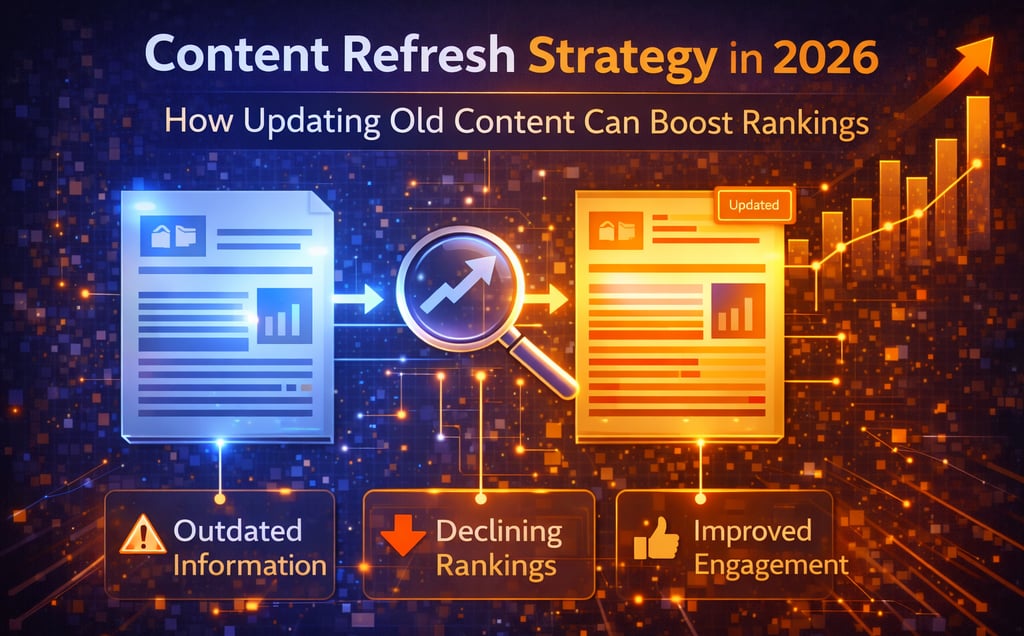

Many SEO strategies focus heavily on creating new content.
Businesses publish blog posts, guides, and landing pages to target new keywords and expand their visibility in search results. While new content is important, one of the most overlooked opportunities for SEO growth lies in improving content that already exists.
In 2026, search engines prioritize content that remains accurate, relevant, and helpful. As industries evolve and information changes, outdated content can quickly lose its ability to rank.
A strong content refresh strategy ensures that your existing pages continue to deliver value while maintaining strong visibility in search.
Why Refreshing Content Matters
Search engines aim to provide users with the most reliable and up-to-date information.
Over time, even high-quality articles can become outdated. Statistics may change, tools may evolve, and new best practices may emerge.
When search engines detect fresher and more relevant content from competitors, older pages may gradually lose their rankings.
Updating existing content signals to search engines that your page remains current and authoritative.
In many cases, refreshing an existing article can deliver faster SEO gains than publishing a completely new one.
Signs Your Content Needs an Update
Not every article requires frequent updates, but several signals indicate that a page may benefit from a refresh.
Declining rankings are often the first sign. If a page that previously ranked well begins to drop in search results, the content may no longer align with current search intent or competitor quality.
Outdated information is another indicator. References to old data, discontinued tools, or obsolete strategies can reduce credibility.
You may also notice competitors publishing newer, more comprehensive versions of the same topic.
When these signals appear, refreshing the content can help restore relevance.
How Content Updates Improve Rankings
Refreshing content allows you to improve multiple SEO signals at once.
Updating an article often expands its depth, making it more useful for readers. Improved structure and clearer explanations can increase user engagement and time spent on the page.
Content updates also allow you to better align with current search intent. As user expectations evolve, adjusting the format or focus of your article can improve its relevance.
Additionally, refreshing a page can strengthen internal linking by connecting it to newer content across your website.
Together, these improvements can significantly boost a page’s search performance.
The Content Refresh Process
An effective content refresh strategy follows a structured approach.
First, identify pages that are losing traffic or rankings. SEO tools and analytics platforms can help locate these opportunities.
Next, analyze the current search results for the target keyword. Study what competing pages include and identify areas where your content may be lacking.
Then expand and improve your content. Add missing sections, update outdated information, and improve clarity.
Refreshing headings, improving readability, and incorporating recent examples can make the article more valuable to users.
Finally, strengthen internal linking by connecting the refreshed page to relevant articles across your website.
When to Update vs Rewrite
Not every piece of content requires a full rewrite.
Some articles simply need small improvements, such as updating statistics, improving headings, or adding a few new sections.
However, if a page has lost significant visibility or no longer matches user intent, a deeper revision may be necessary.
In these cases, restructuring the article, expanding key sections, and improving the overall content strategy can help restore its competitiveness.
The goal is not just to update the page but to make it the most useful resource available on the topic.
Content Refresh and AI-Driven Search
AI-powered search engines increasingly prioritize trustworthy and current information.
As AI systems analyze and summarize content across the web, they favor sources that demonstrate both expertise and relevance.
Pages that are regularly updated send strong signals that the information remains reliable.
By maintaining fresh, accurate content, businesses improve their chances of being referenced in AI-generated answers and search summaries.
The Strategic Advantage
Refreshing existing content is one of the most efficient ways to improve SEO performance.
Instead of starting from scratch, you build upon pages that already have search visibility and authority.
Over time, a consistent content refresh strategy strengthens your website’s topical coverage while keeping information aligned with current trends.
This approach ensures that your site remains competitive even as search algorithms evolve.
Final Thoughts
SEO success is not only about producing new content. It is also about maintaining and improving the content you already have.
As search engines continue prioritizing relevance and usefulness, outdated pages can quickly lose their impact.
By regularly refreshing and strengthening existing articles, businesses can maintain their authority, improve rankings, and provide greater value to their audience.
In 2026, the websites that succeed in search are not just those that publish the most content.
They are the ones that continuously improve it.