
Entity SEO in 2026: How Search Engines Understand Brands, Not Just Keywords
Search engines now understand entities, not just keywords. This guide explains how to build entity authority and strengthen your presence in AI-powered search.
3/5/20263 min read
For years, SEO focused on keywords.
Marketers researched phrases, optimized pages, and tried to match search queries as closely as possible. While keywords still matter, search engines have evolved far beyond simple word matching.
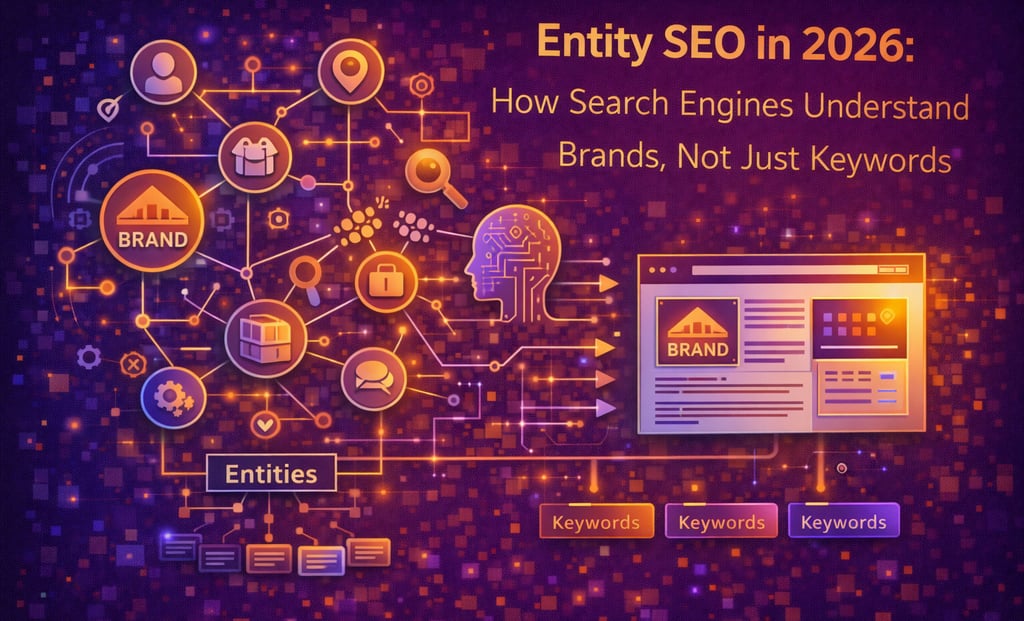
In 2026, modern search systems interpret entities — real-world concepts such as brands, people, products, and topics — and the relationships between them.
This shift changes how websites build authority and visibility.
Instead of optimizing only for keywords, successful SEO strategies now focus on becoming recognized entities within a topic ecosystem.
What an Entity Is in Search
An entity is a clearly defined concept that search engines can identify and understand independently of specific keywords.
Entities may include:
Companies
Products
Technologies
Locations
Individuals
Ideas or topics
Search engines connect these entities through relationships to build structured knowledge about the world.
For example, a search engine may understand that a particular company provides SEO services, specializes in AI-driven strategies, and operates within digital marketing.
This understanding allows search engines to deliver more contextual and accurate results.
From Keywords to Knowledge Graphs
Modern search engines rely heavily on knowledge graphs — massive databases that store relationships between entities.
Instead of simply matching search queries with pages containing similar words, these systems evaluate:
Topic relationships
Brand associations
Industry context
Authority signals
When a search engine understands your brand as an entity within a specific topic area, it becomes easier for your content to appear in relevant searches.
This is especially important in AI-driven search environments where answers are generated by synthesizing multiple trusted sources.
Why Entity SEO Matters in 2026
Search engines increasingly prioritize contextual understanding.
If your website only targets keywords but lacks clear entity signals, it may struggle to build long-term authority.
Entity-based SEO helps search engines understand:
What your brand represents
Which topics you specialize in
How your content relates to broader industry concepts
This clarity strengthens both ranking stability and visibility in emerging AI search experiences.
The Difference Between Keyword SEO and Entity SEO
Keyword-focused SEO aims to match search phrases with optimized content.
Entity-focused SEO aims to establish authority around a concept.
Instead of writing dozens of unrelated articles targeting different keywords, entity SEO encourages building structured topic ecosystems that reinforce expertise.
Over time, search engines begin associating your brand with that topic space.
This association improves trust and visibility across related queries.
Building Entity Authority
Entity authority grows through consistent signals across multiple sources.
Search engines look for alignment between your website, external references, and structured information.
Important signals include:
Consistent brand mentions across trusted websites
Structured data that clearly defines your organization
Deep topical coverage around your core expertise
Internal linking that reinforces topic relationships
The goal is to create a clear, coherent identity around your brand within a specific knowledge area.
The Role of Structured Data
Structured data helps search engines interpret information more accurately.
By implementing schema markup, websites can provide explicit details about their organization, services, products, and authors.
This structured information strengthens entity recognition and increases the likelihood of appearing in rich search features and knowledge panels.
In generative search environments, structured clarity becomes even more important.
Entity SEO and Generative Search
AI-powered search engines synthesize answers by analyzing trusted sources and entity relationships.
When your brand is recognized as a credible entity within a topic area, it becomes more likely to influence these generated responses.
This means entity authority not only impacts rankings but also affects how your brand appears in AI-generated answers, summaries, and knowledge panels.
The future of search visibility depends on being understood — not just indexed.
Integrating Entity SEO Into Your Strategy
Building entity authority requires a structured approach.
Instead of chasing isolated keywords, businesses should:
Develop comprehensive topic coverage around their expertise.
Create clear connections between related pages through internal linking.
Ensure brand information is consistent across digital platforms.
Use structured data to clarify relationships between topics, products, and services.
Over time, these signals help search engines interpret your brand as an authoritative entity within your industry.
The Strategic Advantage
Businesses that invest in entity-based SEO benefit from stronger long-term visibility.
When search engines recognize your brand as a trusted entity, rankings become more stable and content gains broader relevance across related searches.
This is particularly valuable as search continues shifting toward AI-driven experiences where contextual understanding matters more than keyword matching.
Final Thoughts
Search engines are moving beyond keywords.
They are building structured understanding of the world through entities and relationships.
For businesses, this means SEO is no longer just about optimizing pages. It is about building recognizable authority within a topic ecosystem.
Those who adapt to entity-based search will not only rank better — they will become trusted sources within the evolving landscape of AI-powered discovery.