
Search Intent Optimization in 2026: How to Align Content With What Users Actually Want
Discover how understanding search intent can help you create content that matches user expectations and performs better in modern search engines.
3/12/20263 min read
For many years, SEO strategies focused heavily on keywords. Businesses researched popular search terms and created content around those phrases, hoping to rank higher in search results.
But search engines have become far more sophisticated.
In 2026, modern search algorithms prioritize search intent — the reason behind a user's query. Instead of simply matching keywords, search engines aim to understand what users actually want when they search.
This means that even if two pages target the same keyword, the one that better matches the user's intent is more likely to rank.
Understanding and optimizing for search intent has become one of the most important factors in modern SEO.
What Search Intent Really Means
Search intent refers to the purpose behind a search query.
When someone types a question or phrase into a search engine, they are trying to accomplish something. They may want to learn, compare options, navigate to a specific website, or complete a purchase.
Search engines analyze this intent and attempt to deliver results that best satisfy the user's goal.
If your content does not align with the user's intent, it is unlikely to perform well, even if it contains the correct keywords.
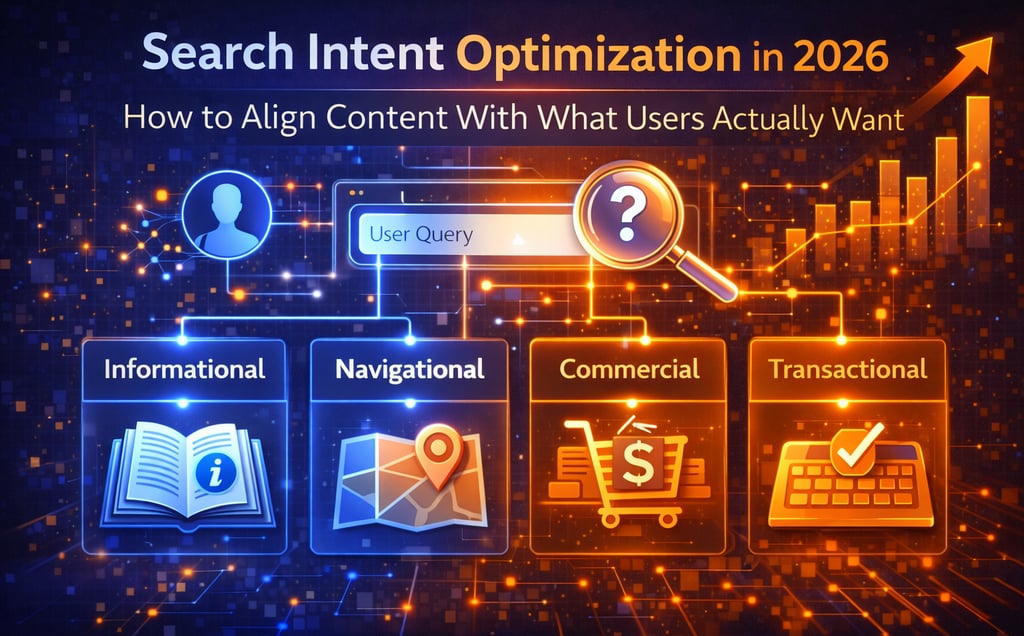
The Four Main Types of Search Intent
Most search queries fall into four broad categories of intent.
Informational Intent
Informational searches occur when users want to learn something or find answers to questions.
Examples include queries such as:
"What is SEO?"
"How does AI affect search engines?"
"Best strategies for content marketing"
Content that satisfies informational intent typically includes guides, tutorials, and educational articles.
Navigational Intent
Navigational intent occurs when users want to reach a specific website or brand.
Examples include searches like:
"Google Search Console login"
"HubSpot blog"
"Ahrefs pricing"
In these cases, search engines prioritize official websites or well-known pages associated with the brand.
Commercial Investigation
Commercial investigation happens when users are researching products or services before making a decision.
Examples include:
"Best SEO tools in 2026"
"Ahrefs vs Semrush comparison"
"Top AI writing tools"
Content that works well for this intent often includes comparisons, reviews, and product guides.
Transactional Intent
Transactional intent appears when users are ready to take action, such as purchasing a product or signing up for a service.
Examples include:
"Buy SEO software"
"SEO agency pricing"
"Subscribe to marketing platform"
Pages optimized for transactional intent typically include clear calls to action, pricing information, and product details.
Why Search Intent Matters More Than Keywords
Many websites fail to rank because they focus only on keywords instead of understanding what users expect to see.
For example, if a keyword is dominated by comparison articles, a simple blog post explaining the concept may struggle to rank.
Search engines study the types of pages that users engage with and prioritize similar formats for future searches.
Matching search intent ensures that your content fits the expectations of the search results.
How Search Engines Evaluate Intent
Search engines analyze several signals to determine user intent.
They examine the types of pages currently ranking for a query. If most top results are guides, the search engine assumes users want informational content.
User behavior also plays a role. Metrics such as click-through rates, time spent on a page, and whether users return to search results help search engines determine whether content satisfies intent.
Over time, search engines learn which types of pages best solve specific queries.
How to Optimize Content for Search Intent
Optimizing for search intent begins with analyzing the search results for your target keyword.
Look at the top-ranking pages and identify patterns. Are they long guides, comparison lists, product pages, or tutorials?
Next, ensure your content format matches what users expect.
If the search results show comparison articles, create a detailed comparison rather than a generic explanation.
It is also important to answer the main question quickly. Many users scan pages for clear answers, so structuring content with headings and concise explanations improves both user experience and search visibility.
Search Intent and AI-Powered Search
AI-driven search systems rely heavily on understanding intent.
Instead of simply matching keywords, AI models attempt to interpret the user's needs and deliver relevant answers.
This means content that clearly solves problems, answers questions, and provides useful insights will perform better in AI-enhanced search environments.
Websites that consistently satisfy search intent are more likely to be referenced by AI summaries and answer engines.
The Strategic Advantage
Businesses that optimize for search intent gain several advantages.
Their content is more likely to satisfy users, leading to longer engagement and higher trust signals.
Search engines also recognize that these pages consistently deliver relevant information, improving their chances of ranking for similar queries in the future.
Over time, aligning content with user intent strengthens topical authority and builds a stronger foundation for organic growth.
Final Thoughts
SEO is no longer just about keywords.
Modern search engines aim to understand users and deliver the most relevant information possible. Content that aligns with user intent naturally performs better because it solves real problems and answers real questions.
In 2026, the websites that succeed in search are those that focus on what users truly want — not just the words they type into the search bar.