
SEO vs Paid Ads in 2026: Which Channel Drives Better ROI?
SEO or paid ads—which drives better ROI in 2026? Learn the key differences, cost comparison, and when to use each for maximum growth.
3/27/20262 min read
One of the most common questions businesses ask is:
Should we invest in SEO or paid ads?
Both channels can drive traffic, leads, and revenue—but they work very differently.
In 2026, the real answer is not about choosing one over the other.
It’s about understanding how each channel contributes to growth and which one aligns with your goals.
The Core Difference
SEO and paid ads operate on fundamentally different models.
SEO focuses on earning visibility in organic search results. It builds traffic over time by creating valuable content, optimizing structure, and building authority.
Paid ads, on the other hand, provide immediate visibility. You pay to appear at the top of search results or across platforms, generating instant traffic.
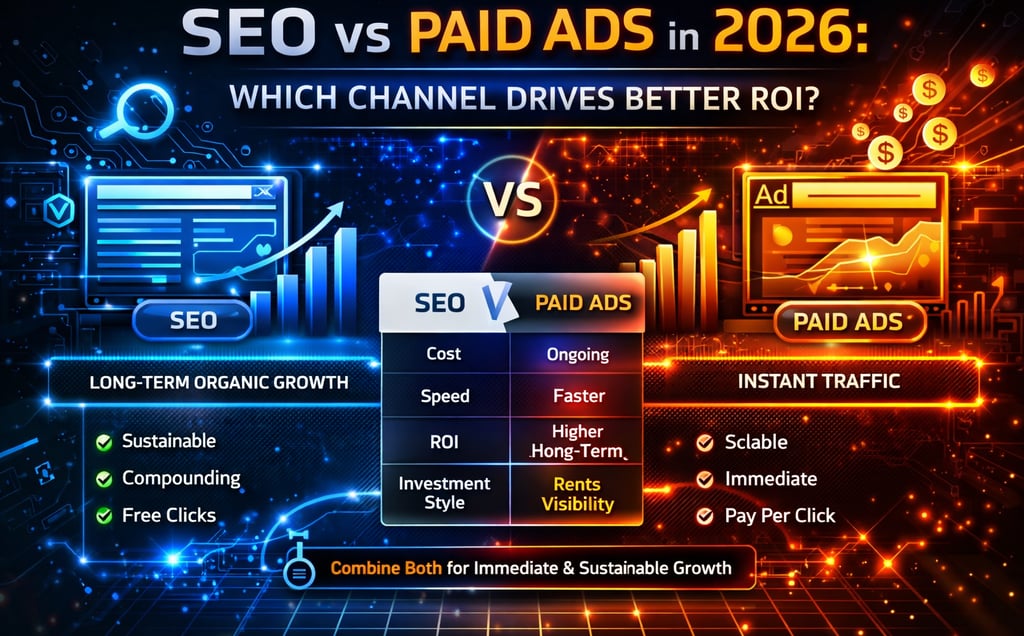
SEO is a long-term investment.
Paid ads are a short-term accelerator.
Cost Comparison
The cost structure of these channels is very different.
SEO requires upfront investment in content, optimization, and strategy. While it takes time to see results, the cost per acquisition often decreases over time.
Paid ads require continuous spending. As long as you pay, you generate traffic. The moment you stop, the traffic disappears.
SEO builds an asset.
Ads rent visibility.
ROI Comparison
Return on investment depends on time horizon.
Paid ads can deliver faster returns. They are ideal for testing campaigns, launching products, or generating immediate leads.
SEO, however, often delivers higher long-term ROI. Once content ranks, it can generate consistent traffic without ongoing cost per click.
In many cases, businesses see compounding returns from SEO as their authority grows.
When to Choose SEO
SEO is the right choice when your goal is sustainable growth.
It works best for businesses that want to:
Build long-term visibility
Establish authority in their industry
Reduce dependence on paid channels
Generate consistent, organic traffic
SEO is especially powerful when combined with strong content systems and conversion optimization.
When to Choose Paid Ads
Paid ads are ideal when speed matters.
They are effective for:
Launching new products or services
Testing messaging and offers
Generating immediate leads
Running time-sensitive campaigns
Ads provide control and predictability, but they require ongoing investment.
The Most Effective Strategy: Combining Both
The most successful businesses do not choose between SEO and paid ads.
They combine them.
Paid ads can drive immediate traffic and validate what works.
SEO can scale those insights into long-term growth.
For example:
Use ads to identify high-converting keywords
Build SEO content around those keywords
Reduce paid spend over time as organic rankings grow
This creates a balanced and efficient growth strategy.
Common Mistakes to Avoid
Many businesses struggle because they misunderstand these channels.
Relying only on ads can become expensive over time.
Expecting SEO to deliver instant results leads to frustration.
Treating both channels as separate instead of complementary limits growth.
The key is alignment.
The Strategic Perspective
SEO and paid ads serve different roles within a marketing strategy.
Paid ads deliver speed and control.
SEO delivers sustainability and scalability.
Understanding this distinction allows businesses to allocate resources more effectively.
Final Thoughts
There is no universal answer to whether SEO or paid ads is better.
It depends on your goals, timeline, and resources.
If you need immediate results, ads are essential.
If you want long-term growth, SEO is critical.
But the real advantage comes from combining both into a unified strategy.
Because in 2026, the businesses that grow fastest are not choosing between channels.
They are using each one where it performs best.